
Florida’s Homestead Exemption and the "Save Our Homes" Cap: Protecting Your Long-Term Estate Value
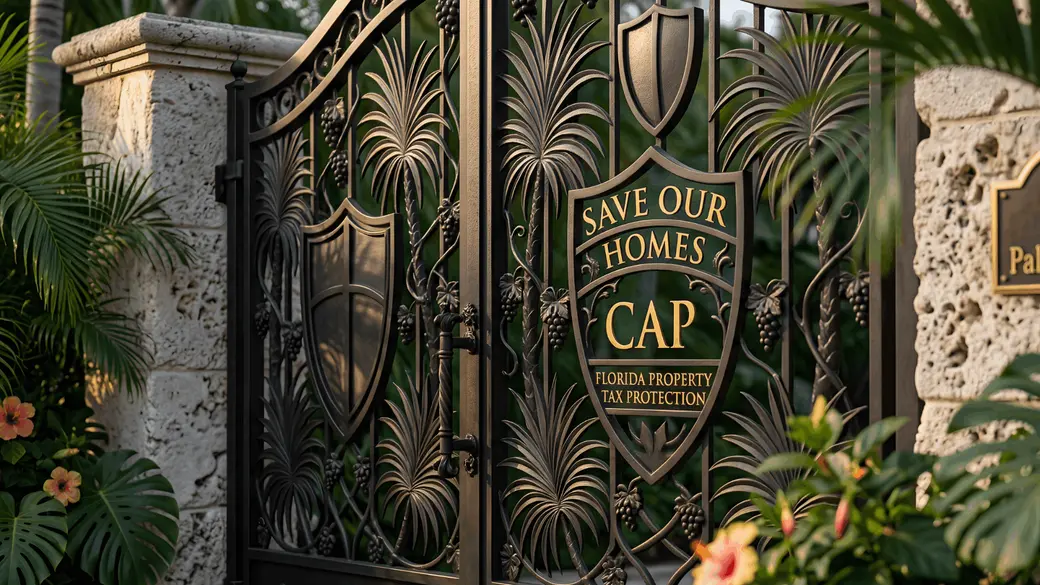
Florida’s Homestead Exemption and the "Save Our Homes" Cap
Strategic Wealth Preservation for High-Value South Florida Real Estate in 2026
For the owners of million-dollar-plus estates in Boca Raton, Delray Beach, and Palm Beach, property taxes represent a significant portion of annual carrying costs. In a rapidly appreciating market, these costs can spiral without proper legal protections. The Florida Homestead Exemption is not merely a tax break; it is a fundamental wealth preservation tool that decouples your property’s taxable value from its market value over time.[1, 2]
The 3% Assessment Shield: Understanding "Save Our Homes"
While the initial $50,000 exemption provides modest immediate savings, the long-term value for UHNWIs lies in the Save Our Homes (SOH) assessment cap. Under Florida Statute §196.012, once a property is homesteaded, the Property Appraiser is prohibited from increasing the "Assessed Value" by more than 3% per year. In a 2026 market where waterfront luxury assets often appreciate by 10% or more annually, this cap creates a massive "tax savings reservoir" that stays with the property as long as you maintain it as your primary domicile.[1, 3, 4]
2026 Update: Amendment 5 and Inflation Indexing
The 2025-2026 fiscal cycle introduced a critical change. With the passage of Amendment 5, the second tier of the homestead exemption (which applies to non-school taxes) is no longer a static $25,000. It now adjusts annually based on the Consumer Price Index.[1, 2] In 2026, this indexed amount has reached approximately $50,722, ensuring that your tax protections scale alongside the cost of living.[1]
A Strategic Advisory Note from Bryan & Alexa
A frequent blind spot for our out-of-state buyers is the "reassessment trigger." In Florida, the year after a property changes hands, the Assessed Value is reset to the current Market Value. This can lead to a "sticker shock" tax bill for those who haven't planned for it. However, if you are moving from another Florida residence, you can "Port" up to $500,000 of your accumulated Save Our Homes savings to your new estate.[1, 2] We frequently work with our clients to calculate the 10-year ROI of portability, which often justifies the acquisition of a larger "legacy compound" in the Boca-Delray corridor.
Homestead Portability: Transferring Your Savings
Florida law allows primary residents to transfer their SOH tax benefits from one homesteaded property to another within three tax years. This "Portability" allows you to carry the difference between your previous home's market value and its capped assessed value.[1, 2] For UHNWIs upsizing to a $10M+ property, this can result in tens of thousands of dollars in annual savings from the moment of closing.
2026 Compliance: The AI Audit Landscape
Establishing a homestead is a serious legal claim. In 2026, the Florida Department of Revenue has fully integrated AI-driven cross-referencing tools to detect Homestead Fraud.[5, 6] These systems flag properties where the owner simultaneously claims a residency-based tax credit in another state or where digital footprints suggest the property is a rental rather than a primary home.[6, 7]
| Audit Trigger | 2026 Risk Factor |
|---|---|
| License Discrepancy | Driver's license address does not match the homesteaded property.[5] |
| Short-Term Rental | Property is listed on vacation platforms for more than 30 days.[7] |
| Out-of-State Benefits | Claiming a "STAR" exemption in NY or a primary residence credit in CA.[6] |
| Voter Registration | Active voter registration in another jurisdiction.[5] |
Secure Your Asset's Long-Term Value
Navigating Florida's complex tax and residency statutes requires an advisor who specializes in high-net-worth acquisitions. Contact Luxury Premier Estates for a confidential session on how to optimize your tax position for your next acquisition.
Request a Private ConsultationSources & Technical References
- [1] Florida Statute §196.031, "Homestead exemptions."
- [8] Florida Statute §196.012, "Definitions; Save Our Homes assessment cap."
- [2] Florida Department of Revenue, "Amendment 5: Annual Inflation Adjustments to Homestead Exemptions (2025-2026)."
- [9] Palm Beach County Property Appraiser, "Guide to Homestead Portability and Save Our Homes."
- [3] Kiplinger, "Retiring in Florida: How Tax Breaks Benefit High-Net-Worth Residents in 2026."
- [10] BillTrack50, "Florida H0203: Elimination of Non-school Property for Homesteads status."
- [5] Florida Highway Safety and Motor Vehicles (FLHSMV), "Residency Requirements for Licenses and Registrations."
- [4] Fox Business, "Wealth Migration: Why South Florida Real Estate Remains a Tax Haven in 2026."
- [6] Florida Department of Revenue, "Automated Compliance and Fraud Detection in Homestead Filings."
- [7] Indian River County Property Appraiser, "Misdemeanor Penalties for Homestead and Exemption Fraud."
Categories
Recent Posts








GET MORE INFORMATION